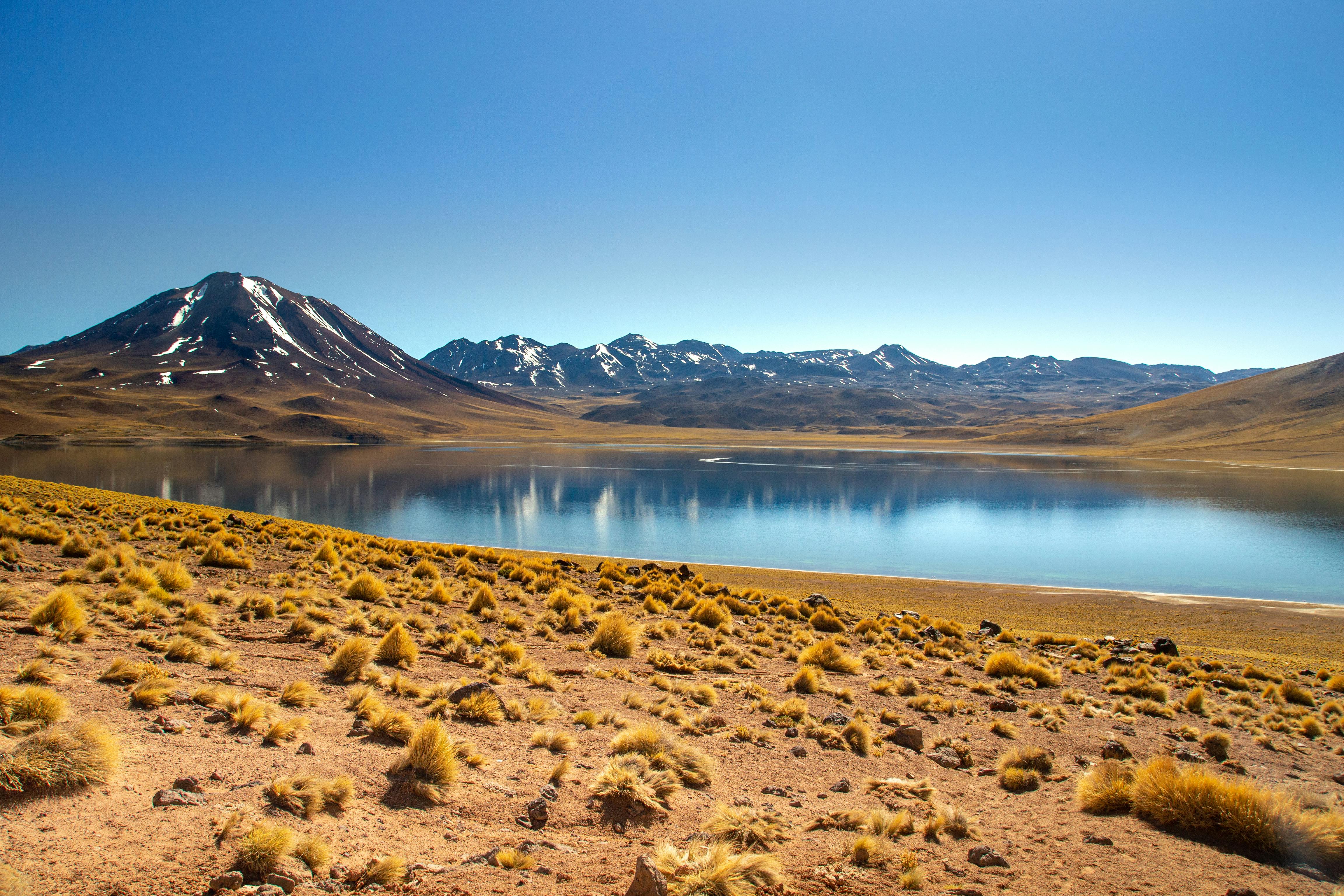
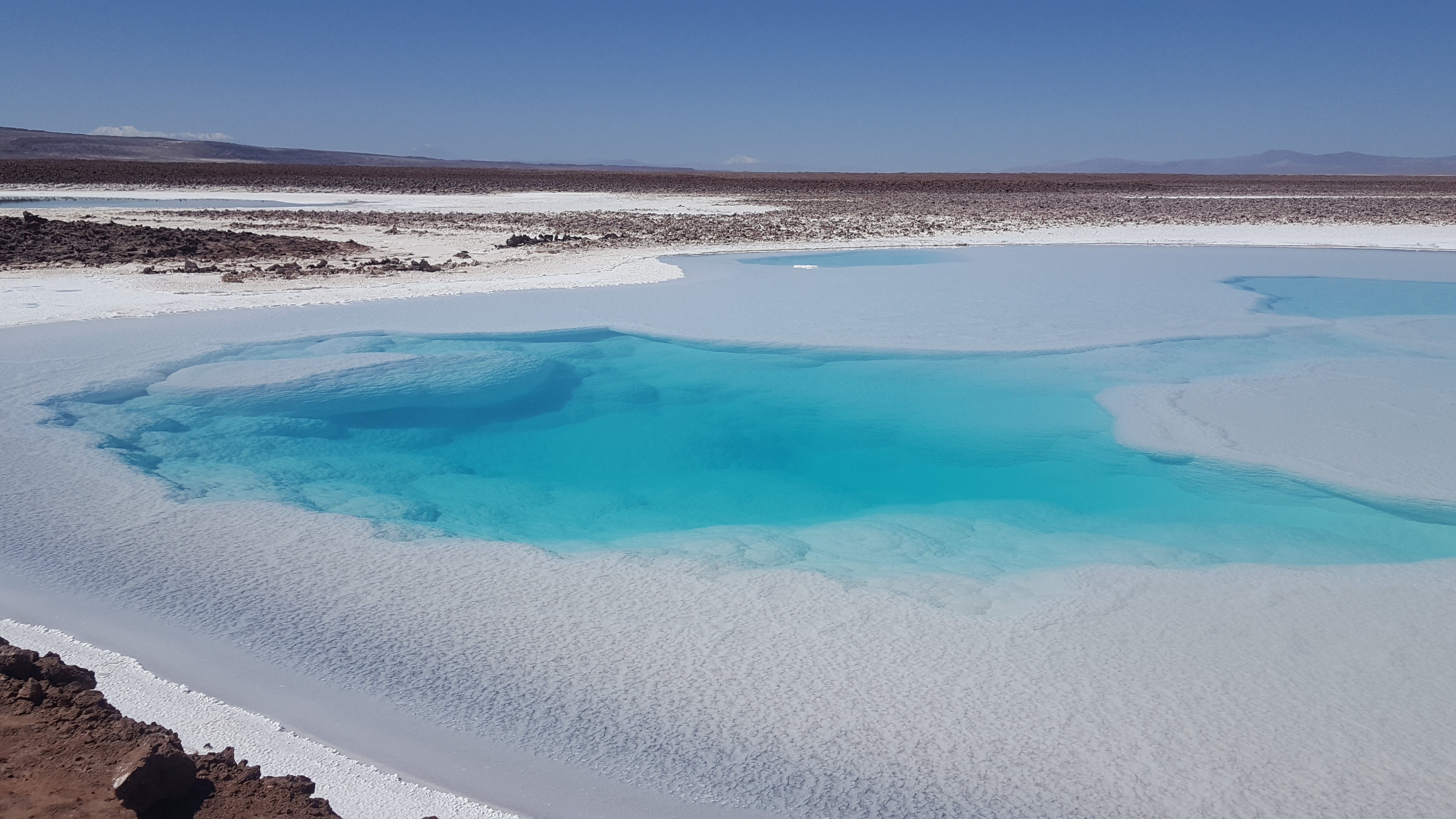
The tour to Laguna Baltinache, also known as the Hidden Lagoons of Baltinache, invites you to discover one of the most stunning and pristine spots in the Salar de Atacama. This group of deep turquoise lagoons, surrounded by a white landscape of crystallized salt, offers a unique visual experience and an atmosphere of absolute tranquility in the middle of the world’s driest desert.
The tour begins with a drive to the western part of the salt flat, where the road winds through an almost lunar landscape. Upon arriving at Baltinache, visitors encounter a series of lagoons lined with salt formations and shimmering surfaces that reflect the sunlight. The high concentration of salt allows you to float naturally, creating a sensation of weightlessness similar to that of Laguna Cejar, but in a much more isolated and quiet setting.
During the visit, travelers can walk along marked trails that connect several lagoons, each with different hues ranging from deep blue to emerald green. The contrast between the crystal-clear water, the white salt, and the deep blue sky creates the perfect setting for photography and contemplation.
Local guides share information about the formation of the salt flat, the geology of the area, and the importance of conserving this fragile ecosystem. They also explain the origin of the lagoons, their mineral composition, and the extreme conditions that allow these bodies of water to exist in the middle of the desert.
The tour ends with time to relax, enjoy the scenery, and appreciate the silence of the Atacama—one of the most distinctive aspects of this experience. Laguna Baltinache is ideal for those seeking a less crowded spot, with hypersaline waters, intense colors, and an atmosphere of peace that only the desert can offer.
Travel is the movement of people between relatively distant geographical locations; it can involve travel on foot, by bicycle, by car, by train, by boat, by bus, by plane, or by other means, with or without luggage, and can be one-way or round-trip. Travel can also include relatively short stays between successive trips.
The origin of the word "travel" is most likely lost to history. The term "travel" may derive from the Old French word *travail*, which means “work.” According to the Merriam-Webster dictionary, the first known use of the word “travel” was in the 14th century.
It also states that the word comes from Middle English *travailen*, *travelen* (meaning to torment, labor, strive, or journey) and, earlier, from Old French *travailler* (meaning to work strenuously or toil). In English, we still occasionally use the word “travail,” which means struggle. According to Simon Winchester in his book *The Best Travelers’ Tales* (2004), the words “travel” and “travail” both share an even more ancient root: a Roman instrument of torture called the tripalium (in Latin, it means “three stakes,” as in to impale).